CTV Advertising 101: An Essential Guide [with Examples]

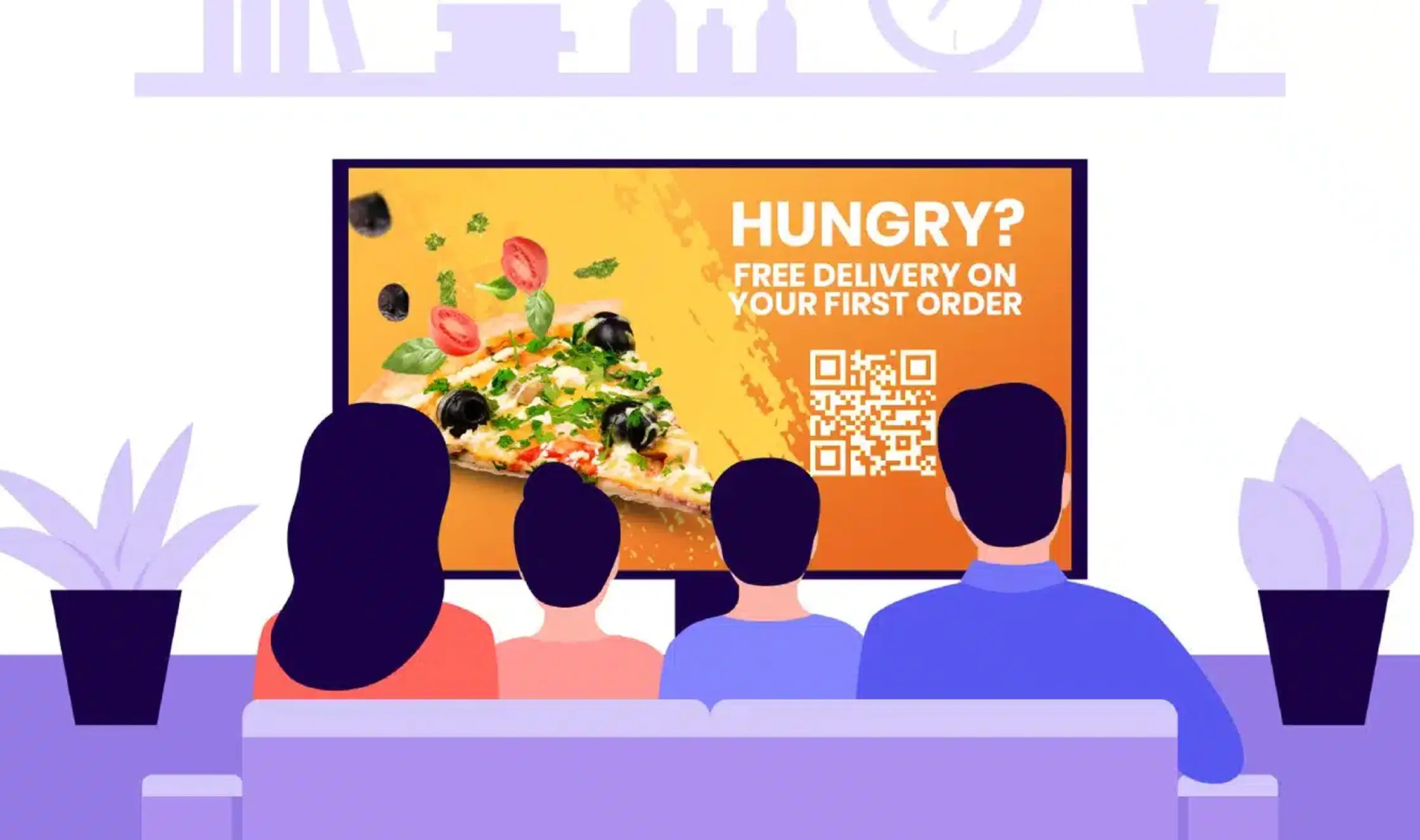
This is part one of a two part article series. In part one, the article below, we give an overview of what CTV advertising is while part two will dive deep into using CTV for app growth.
Did the internet kill the TV star? In the context of advertising, the answer to this question depends on who you ask. The synergistic effect between internet connectivity and evolving television viewing behaviors has given birth to a new breed of digital advertising - connected television advertising - or CTV.
Today, CTV represents over 80% of all viewing on most streaming TV services like Netflix and Hulu. It’s where the audience is, so naturally, it’s where the budgets go. However, CTV advertising presents a much bigger opportunity.
For the target audience in front of the big screen, CTV brings better-timed, more relevant, and more engaging ads. For advertisers, the move from linear TV to CTV can boost ROAS significantly. After launching a CTV campaign, some advertisers saw 22% stronger conversion rates for paid search and 9% stronger for paid social.
Getting your app seen on the television screens of your target audience today may be cheaper and easier than ever before, but before you throw your ad dollars into the rapids of viewer content streams, you should start by getting to know CTV advertising.
What is Connected TV (CTV) advertising?
To define CTV advertising, we must first understand what CTV is. Connected Television (CTV) is defined by the Media Rating Council as the delivery of digital video to televisions via internet-connected devices (or functionality within the television itself).
Connected TV (CTV) advertising is a form of digital advertising that leverages CTV capabilities and features to deliver targeted and relevant advertisements to viewers. It combines the power of TV advertising, with its large-screen impact and brand awareness building capabilities, with the precision, lead attribution, and interactivity of digital advertising.

Source: Overview and Best Practices for Connected TV Advertising - Innovid
Generally speaking, CTV is a broad term encompassing all and any combination of connectivity and the big screen. This includes gaming consoles, dongles, smart TVs, and “over the top” (OTT) devices.
Essentially small computers, these devices can run applications like Netflix, Hulu, Amazon Prime Video, Disney Plus, and applications belonging to their favorite local channels. Instead of flipping channels, users today can swipe between the personalized content offered to them by the various streaming apps installed on their devices.

Source: Conviva’s State of Streaming (Q1 2022)
From the advertiser’s perspective, CTV turns the unmeasurable and expensive ordeal of broadcast TV advertising into hyper-targeted, data-driven, and measurable engagement with the target audience. In addition, CTV lets advertisers experiment and optimize their creatives, bids, and target audiences in near-real-time. This form of advertising provides a valuable tool for app install campaigns, amongst more general advertising means. It also empowers them to leverage innovative and interactive ads, cross-device retargeting, and clickable overlays that enhance the viewer experience rather than disrupt it.
3 Types of CTV ads (with examples)
CTV ad formats and types vary between applications, networks, and platforms. They also change and evolve rapidly, introducing new and innovative ways to capture viewer’s attention and drive them forward in their buying journey.
#1. In-stream video ads
In-stream video ads bear the most resemblance to traditional linear TV advertising. They are the most commonly used type of CTV ads, and it is also best identified with the advertising channel. In-stream video ads are usually categorized by their timing: before (pre-roll), during (mid-roll), and after (post-roll) the content viewing.
Video ads are usually 15-30 seconds long and may or may not be set as skippable. Typically used for brand awareness campaigns or as part of cross-channel retargeting, in-stream video ads are well-received among older viewers because they resemble the traditional linear TV advertising experiences. That said, in-stream videos are meant for passive viewing, sometimes alongside other ads, in what may constitute a “commercial break” that is both intrusive and lacks the interactivity to drive sales.
For example, if placed in the right context and shown to the right audience, this cute ad can make something as unattractive as car repair financing into a light and amusing subject.
#2. Interactive ads
Connectivity means interactivity. With our remote control or console joystick in hand, we can interact with our CTV - including sponsored content and ads. Interactive ads can include clickable elements, interactive games, quizzes, or surveys. In some cases, they can even be used to add a product to an Amazon shopping cart or install another app on the OTT device without pausing the video being viewed.
One of the most iconic examples of interactive CTV ads in recent years is an ad by Volvo that took a creative approach to promoting its new s90 model. The innovative and engaging ad drove a 35% lift in sales of the model.
#3. Overlay & pop-up ads
Like web-based banners and pop-ups, CTV ads can be non-disruptive visuals, partially hiding the streamed content. This category also includes clickable banners embedded in OTT applications, and ads displayed alongside end credits in a split-screen.
An interesting and creative example of overlay ads in CTV is a Dunkin Donuts ad that also employed TV-to-mobile - an innovative approach that lets advertisers turn viewers into leads almost immediately.

Source: Connekt's connected TV advertising platform lets viewers shop right from linear TV ads
How CTV advertising works
The CTV advertising ecosystem is complex but not very different from the web and mobile digital advertising ecosystems. Generally speaking, your partners in getting your ads on connected televisions can be divided into three distinct groups: programmatic (DPS), platform direct, and publisher direct. Each of these has unique advantages and disadvantages and is suitable for different audiences and advertisers.

Publisher direct
The category that most resembles the digital version of linear television advertising is the publisher’s direct approach. In these cases, the ad exchange is negotiated between the advertiser and the OTT service provider directly. To purchase ad inventory directly from publishers, you will need to dedicate quite a bit of time and budget to negotiate the direct ad exchange. In return, you will get tighter control over which programs or channels display your ad.
However, in addition to being costly, publisher direct contracts offer limited exposure, and publishers may also pose some competitive restrictions, favoring more profitable advertisers. Even though the publisher-direct approach can limit your reach, it can be beneficial when the publisher’s audience aligns with your CTV advertising goals.
Platform direct
One level above the publisher is the CTV platforms like Roku, Amazon Fire Stick, and Apple TV. Typically self-service based, the platforms may offer lower rates and more unique placement options for advertisers that take the time to master them and produce platform-specific ad types.
For example, Amazon and Roku offer clickable display banners, while Samsung Ads include linear TV ad placements as well as CTV inventory. With each platform offering its unique features, user base, and advertiser interface, the learning curve can be steep.
Programmatic
Last but absolutely not least is the programmatic category, which is the go-to choice for advertisers dipping their toes into the CTV advertising waters. Programmatic platforms, such as Edge226, offer broader reach across platforms and publishers, lower eCPM, transparent reporting, granular targeting and segmentation options, and more.
On the downside, programmatic inventory is often the inventory that platforms and publishers have failed to sell in direct deals for premium prices. For the same reasons, programmatic platforms are often limited in terms of ad types supported and trade only in non-clickable ads (such as in-stream video ads).

Programmatic CTV advertising may be the best choice for newcomers to the space, but self-managed cross-platform CTV ad campaigns require a level of expertise similar to that needed for self-service buying from CTV platforms.
Your typical self-serve programmatic CTV ad platform will give you full control of campaign setup, strategy, bidding, scheduling, optimization, performance tracking, and A/B testing. You would need full-time, in-house dedication to execute campaigns on programmatic exchanges effectively.
This is where Edge 226 can help busy advertisers. With the Edge226 Peak Platform, mobile marketers are armed with a scalable tool for app install campaigns and more.
When using the Peak Platform, you only pay for results, so you can focus on optimizing your paid user acquisition campaigns without the worry of high spend for little return.
How to measure CTV ad campaigns
It’s easy to get swept up in the glitz and the glamor when you try a new advertising campaign strategy, but you must be aware of how to measure your CTV ad from the start.
Measuring and optimizing the ad should be an ongoing process, as you can draw insights from the data to better understand how well the ad can perform.
Some of the key ways to measure the success includes: user reviews, user acquisition, completion rate, frequency, reach of the ad, and the conversion rate being how many times the app has been downloaded.
You should track the above metrics to ensure your CTV campaign is tailored to your target audience and the competitive landscape - both of which may change over time, so it’s vital you maintain an oversight on your KPIs.
Let programmatic pros bring your message to the (perfect) big screen
Making the most of the complex and evolving CTV ad scene requires a deep understanding of the platforms, exchanges, and opportunities in the ecosystem and a holistic revenue-driven approach to the channel.
To capitalize on the reach and ROAS potential of programmatic CTV advertising without engaging in trial and error, you can employ Edge 226’s unique Peak platform to gain your edge. With it, you can leverage proprietary ML algorithms and sophisticated hyper-targeting options to maximize outcomes and reach users that are more likely to deliver long-term value.
Book a demo today to experience the impressive powers of the Peak platform.